Brightline Electrical doesn’t operate in one lane. With residential, commercial, and new construction growing under one brand, success brought a new level of complexity. Task Allot strengthened the infrastructure behind that growth—creating stronger demand, a better customer journey, smoother execution, and tighter financial control. The result: a business built with the capacity to take on more without creating more chaos.
“As Brightline continued to grow, we reached a point where we knew we needed help strengthening what was happening behind the business. Task Allot helped us bring more structure to our systems, processes, and day-to-day operations, giving our team the support and capacity we needed to keep moving forward with confidence.” — Brightline Electrical
Brightline's ability to serve residential, commercial, and new-construction customers gave the company multiple paths for expansion. But each area of the business operates differently.
Residential work brings a steady flow of individual customers, service requests, scheduling, communication, and shorter job cycles. Commercial projects introduce larger scopes, longer relationships, more coordination, and different customer expectations. New construction adds another layer through builders, developers, project schedules, permitting, crews, inspections, documentation, and longer financial cycles.
As those three areas grew together, Brightline didn't simply need more customers.
It needed the infrastructure to support the company it was becoming.
Without that infrastructure, growth could place increasing pressure on scheduling, customer communication, administrative workload, project coordination, financial processes, leadership, and the company's ability to consistently deliver across all three divisions.
Task Allot therefore approached Brightline as one interconnected business system, not a collection of individual problems or services.
We evaluated the company through the Four Business Engines—Revenue Generation, Customer Acquisition, Operations & Execution, and Financial Control—to identify where the infrastructure needed to be strengthened to support Brightline's next stage of growth.
The objective was not simply to help Brightline generate more work.
Rather than treating branding, marketing, administrative support, operations, and finance as unrelated services, each capability was viewed as part of the larger business system.
Brightline's three divisions needed to remain distinct enough to serve very different customers while still operating as one company supported by one connected infrastructure.
That meant strengthening the Four Business Engines together:
Creating consistent opportunities across residential, commercial, and new construction.
Building the systems, positioning, messaging, and customer journeys necessary to turn those opportunities into business.
Strengthening the processes and support behind scheduling, communication, coordination, administration, project execution, and increasing workload.
Creating stronger visibility and structure around the financial activity required to support a growing multi-division company.
The goal was capacity—not simply activity.
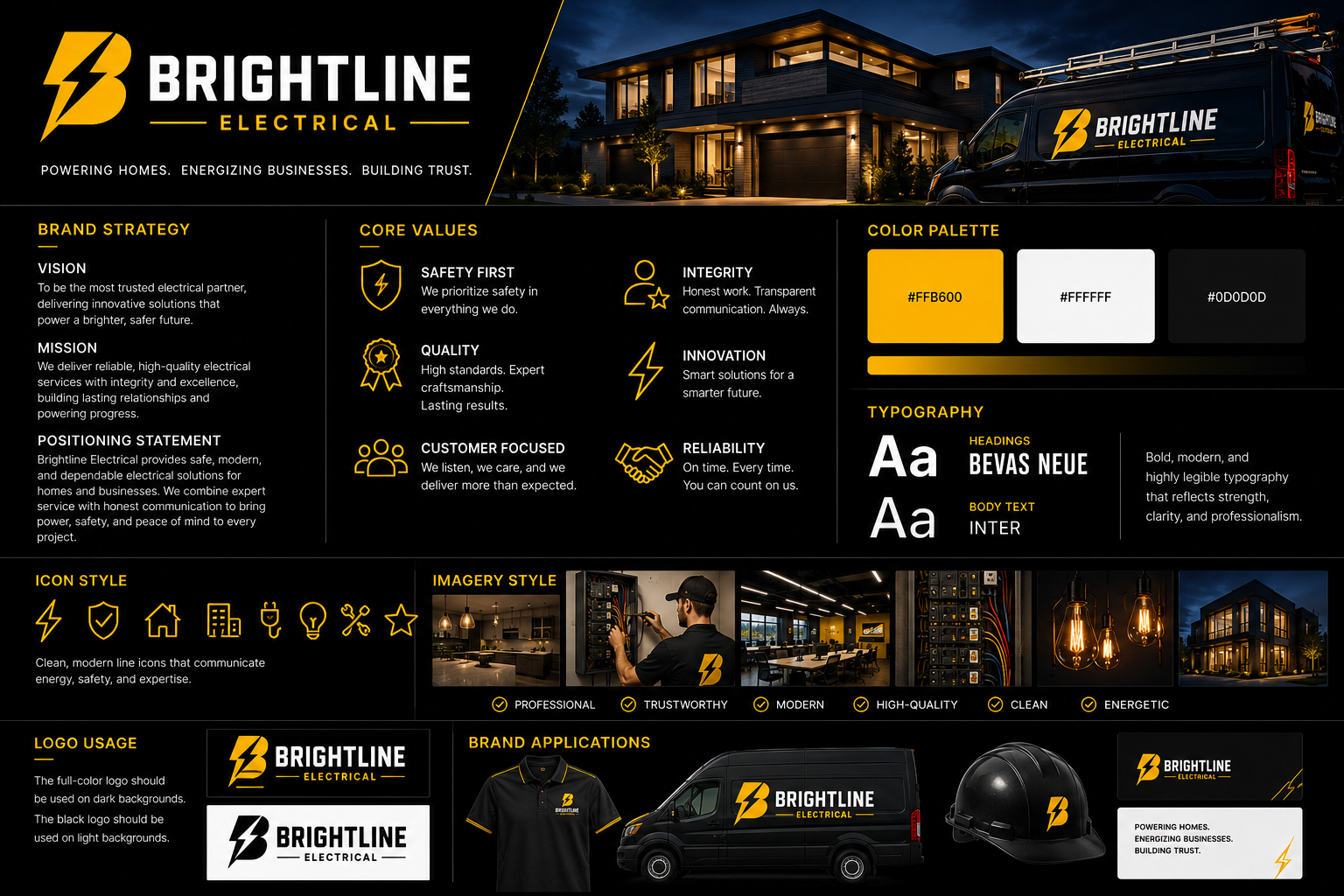
Task Allot developed a structure that allowed each Brightline division to generate opportunities based on its own customer, buying cycle, and business need.
Residential communications could address homeowners needing repairs, upgrades, lighting, panels, inspections, fixtures, and other electrical services.
Commercial positioning could speak to businesses requiring new installations, system upgrades, retrofits, lighting, power distribution, backup power, and preventive maintenance.
New-construction positioning could reach builders, developers, general contractors, and project decision-makers looking for an electrical partner capable of supporting larger projects from planning through completion.
Marketing became one tool within this engine through:
Instead of marketing everything Brightline did to everyone, Task Allot created a structure capable of supporting multiple revenue channels under one company.
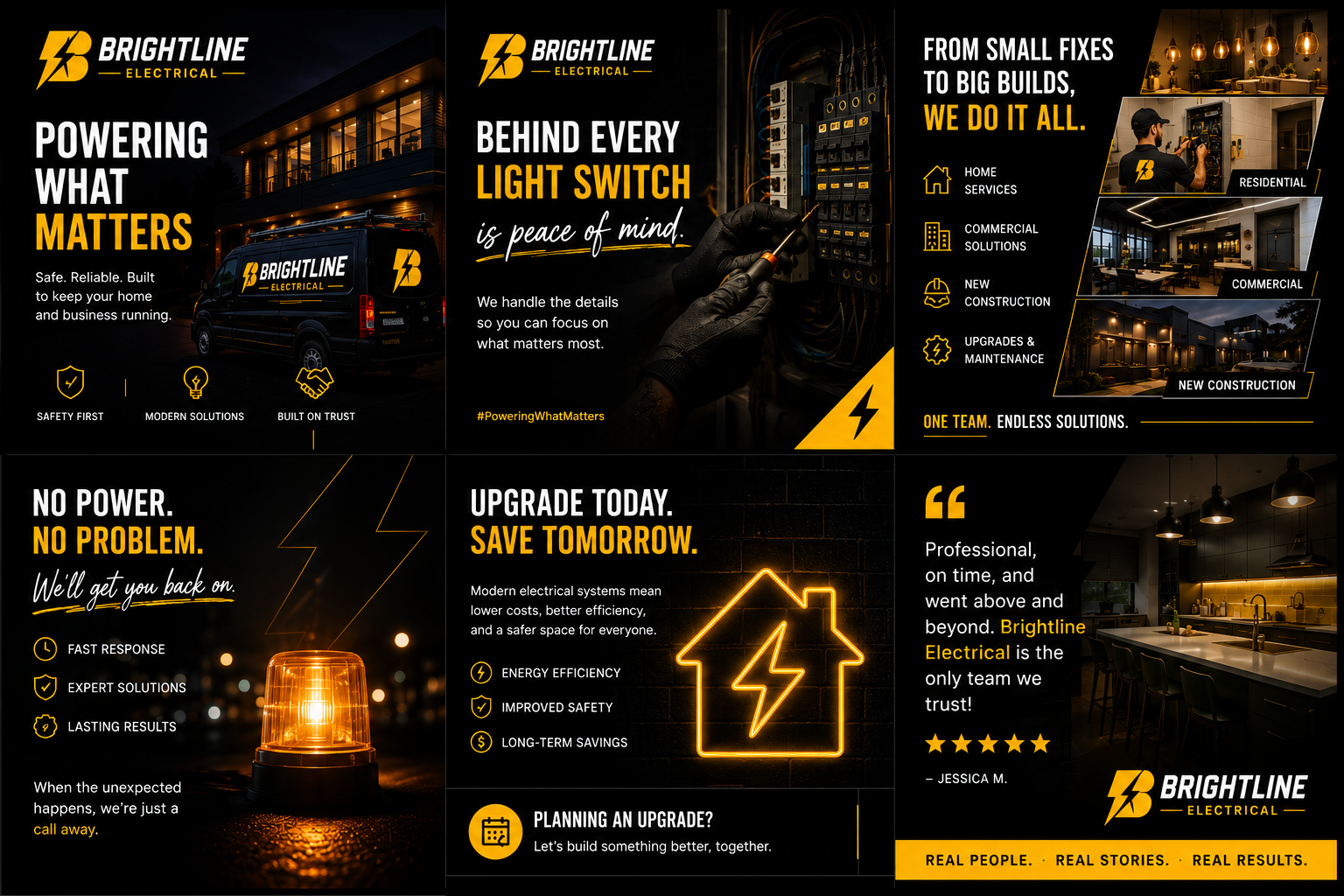
With three divisions, Brightline wasn't dealing with one customer journey.
A homeowner may need immediate reassurance and a simple way to schedule service.
A commercial customer may need evidence of capability, reliability, safety, and experience.
A developer or general contractor may evaluate planning, compliance, crew capability, communication, timelines, and Brightline's ability to perform within a much larger construction process.
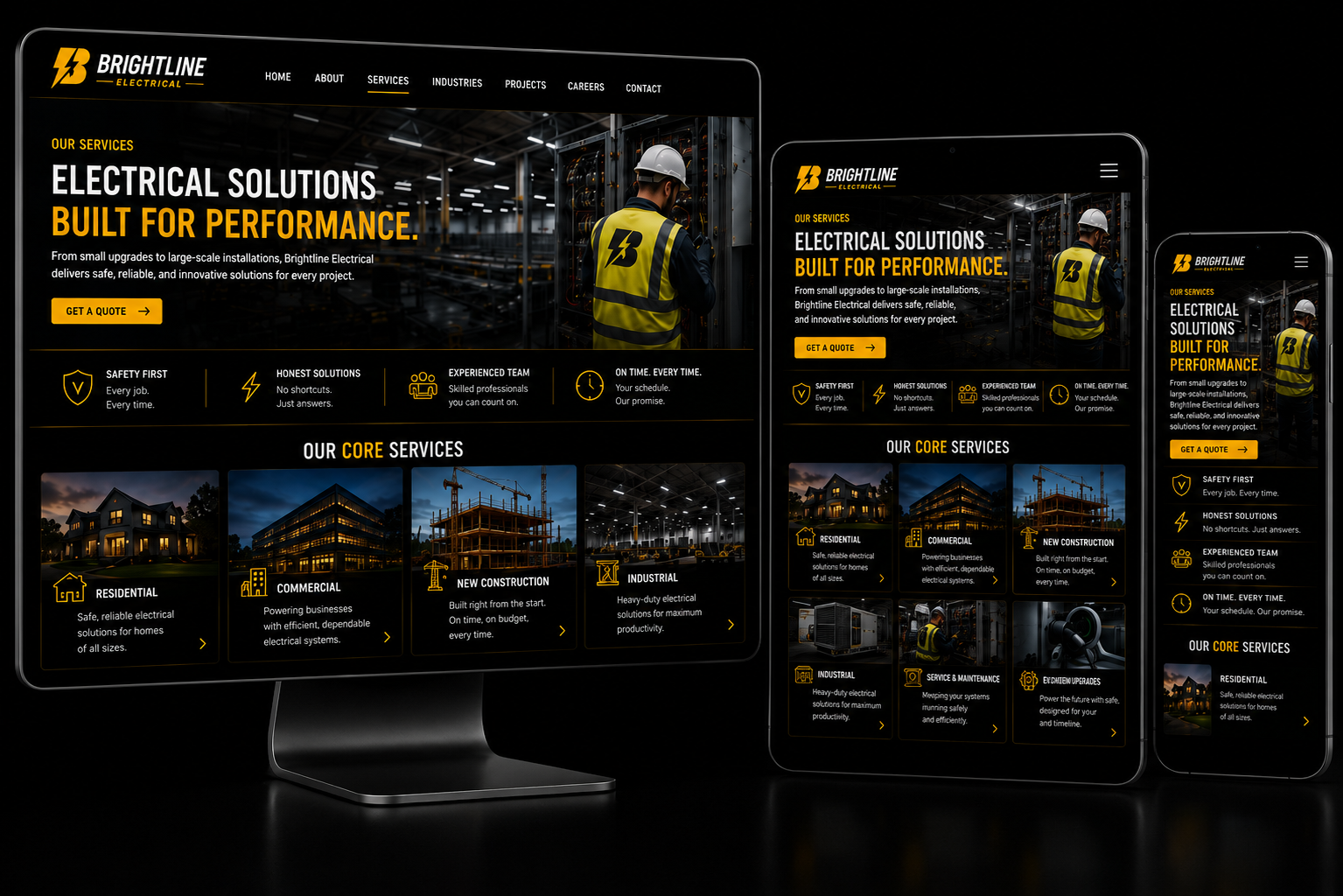
Task Allot strengthened the infrastructure connecting those different prospects to the company.
The Brightline brand created a common foundation around:
Safety First. Honest Solutions. Built on Trust. On Time. Every Time.
From there, the customer-facing strategy could adapt to each division without creating three disconnected companies.
Brightline could communicate:
Residential:
From Small Fixes to Big Builds, We Do It All.
Commercial:
Powering Your Business. Building Your Future.
New Construction:
Built Right From the Start.
The result was a clearer acquisition system in which customers could quickly understand:
What Brightline does → Whether Brightline serves them → Why Brightline is qualified → What makes the company different → What they should do next.
Winning additional work across three divisions means very little if the business becomes overwhelmed trying to execute it.
Residential, commercial, and construction projects create different demands on scheduling, communication, project coordination, documentation, customer follow-up, crews, administrative work, and leadership attention.
As volume increases, informal processes that worked at a smaller size can begin creating bottlenecks.
Task Allot's infrastructure approach focused on creating greater support behind the work so that increasing demand did not automatically translate into increasing pressure on ownership and key employees.
The Operations & Execution Engine looked at the systems surrounding:
For Brightline's new-construction division, this becomes especially important because the work requires coordination across planning, permitting, schedules, crews, contractors, inspections, and project milestones.
The objective was simple:
That is the difference between merely creating demand and building sustainable growth.
A residential service business may process many smaller transactions.
Commercial work can introduce larger invoices, longer payment cycles, material costs, labor requirements, and customer accounts.
New construction can involve significantly larger project values, progress billing, longer timelines, contractor relationships, project expenses, receivables, payroll demands, and cash-flow considerations.
Running all three creates a need for stronger financial visibility—not simply more bookkeeping.
Task Allot's Financial Control approach focused on strengthening the systems surrounding:
The purpose is not merely processing transactions.
It is giving leadership the financial infrastructure necessary to understand what is happening across the business and make more confident decisions as Brightline grows.




Revenue Generation created clearer paths for residential, commercial, and new-construction opportunities.
Customer Acquisition strengthened how those different audiences understood, trusted, and engaged with Brightline.
Operations & Execution addressed the capacity required behind the scenes as more work moved through the company.
Financial Control strengthened the structure needed to manage the increasing financial complexity accompanying growth.
And because those engines were approached as one interconnected system, improvements in one area were designed to support the others.
Brightline wasn't simply becoming more visible.
It was becoming more capable of supporting what greater visibility could produce.
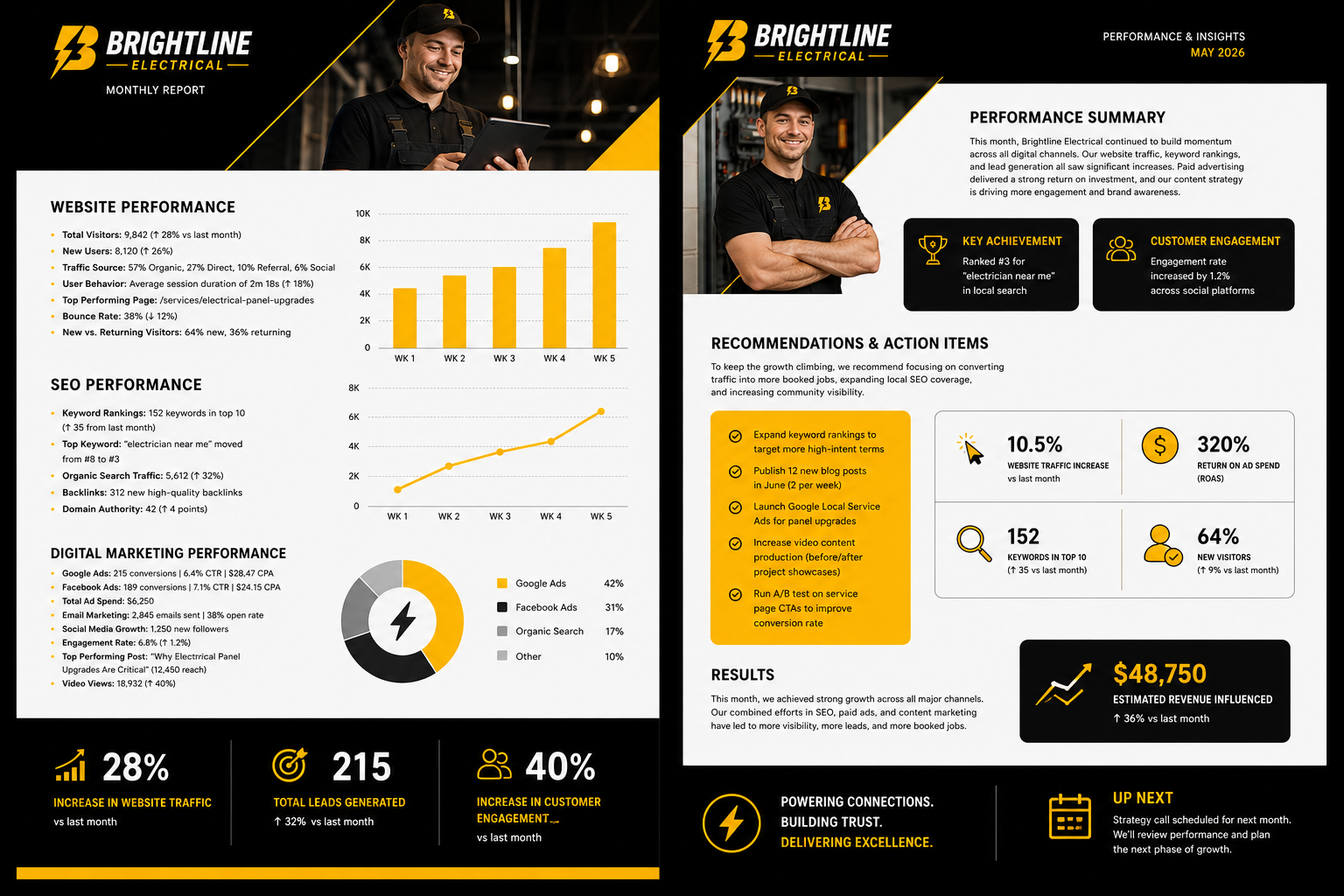
For now, because we don't have verified performance analytics, I would keep this section factual:
When we have actual Brightline numbers, we replace these with measurable outcomes.
Residential, commercial, and new construction each represented an opportunity—but every additional opportunity also created additional demands on customer acquisition, operations, people, processes, financial systems, and leadership.
Task Allot's role was to connect those pieces.
Not simply to create another campaign.
Not simply to redesign how Brightline appeared to the market.
And not simply to complete more tasks.
The objective was to build capacity.
By strengthening the infrastructure across Brightline's Four Business Engines, the company became better positioned to pursue growth across all three divisions without treating each new customer or project as another burden on an already stretched system.
That's the Brightline story I would use. It now puts the business infrastructure first and the marketing work in its proper place inside the Revenue Generation and Customer Acquisition Engines, rather than allowing marketing to become the case study itself.